2 October 20265 minute read
A polished listing is not evidence
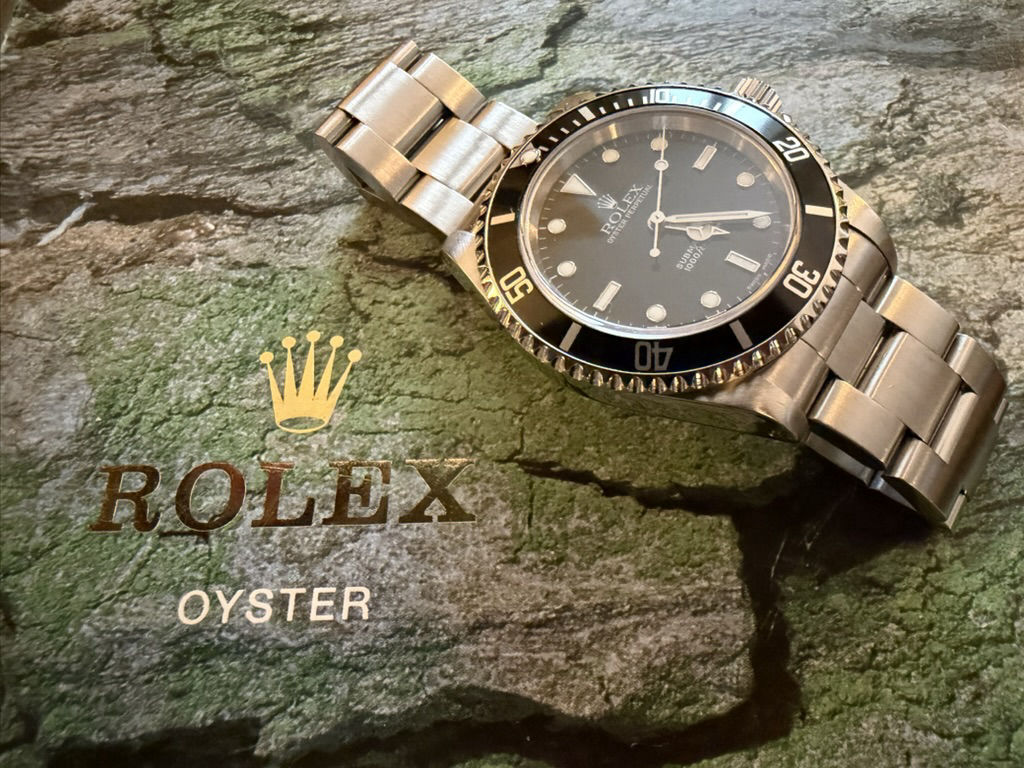
Trust in online resale relies on several things: the person behind the transaction, the photographs supporting the item and the accuracy of the listing.
Each can answer, or leave unanswered, the questions that decide whether a buyer goes ahead.
A listing can look complete, read well and contain technically accurate information without giving the buyer enough confidence to decide.
That distinction matters for any marketplace handling valuable, complex or highly collectible products.
Adding fields is the easy part
Take this 2003 Rolex Submariner 14060M.
Any marketplace can add fields for model, year, condition, box and papers, service history and originality. That is the easy part.
The harder part is knowing which questions matter for that particular item, what supports each answer, where the information conflicts and what still requires independent authentication.
A seller might state that the watch is in good condition and includes its box and papers. Clear photographs may show the dial, bezel, bracelet and clasp.
But those elements do not all carry the same weight. The marketplace still needs to distinguish between:
One listing, five claims, three rungs of support
- Stated by the sellerReached
- Visible in the photographsReached
- Supported by documentsReached
Still unanswered: Whether every component is original to that watch.
A longer description does not resolve those distinctions. A fluent description can sometimes hide them.
Originality is not a yes or no question
"Box and papers included" sounds like a simple yes or no question. For a collector, it is only the beginning.
The distinction becomes clearer with an older example. A watch manufactured in 1973 might be offered with a box from 2014 and a recent service document. The box and the document may both be genuine, but neither is original to the watch.
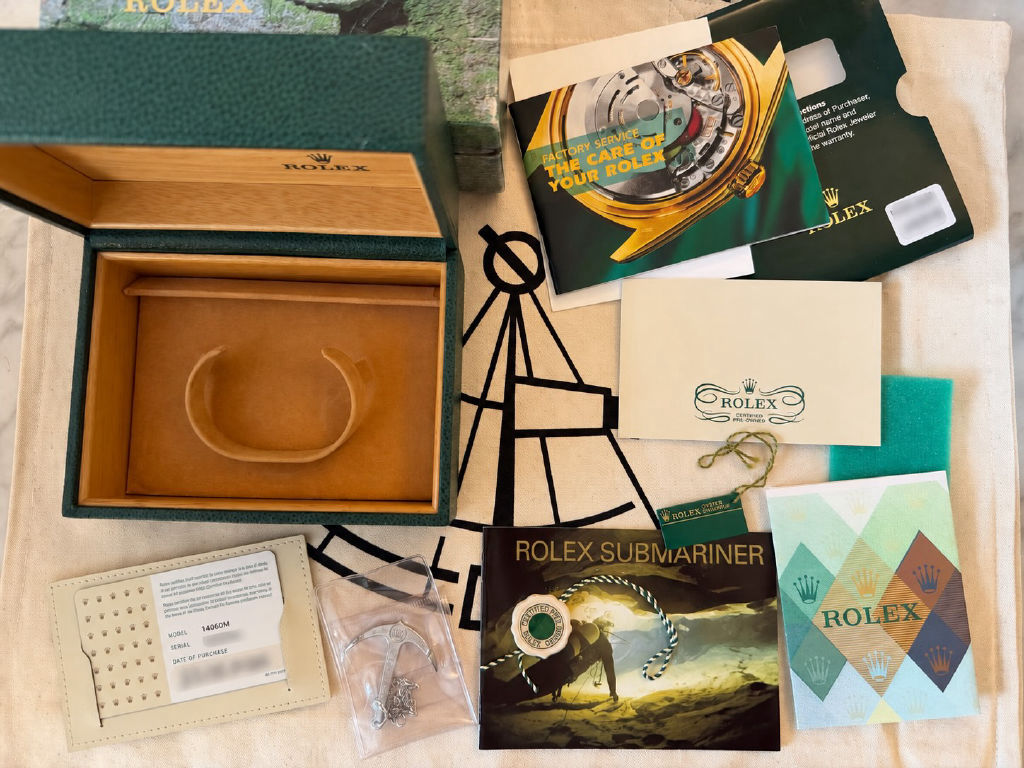
Service history can introduce similar questions. A watch sent to Rolex for service in 2024 could return with a later replacement dial, hands, bezel or other components. The watch may be genuine, correctly serviced and entirely suitable for someone who values condition and reliability. A collector seeking originality or period-correct components may see it differently.
Polishing is another example. It can improve the appearance of a worn case, but repeated or heavy polishing can change its proportions, soften its edges and leave the lugs thinner, uneven or altered. That may not concern every buyer. For another collector, it could materially affect desirability and value.
The purpose is not to declare one watch good and another bad. It is to remove the ambiguity. A decision-ready listing should make clear:
- Whether the box and papers are original to the watch.
- Which components are believed to be original or period-correct.
- Whether any components were replaced during servicing.
- Who carried out the service or repair work.
- Whether the case has been polished.
- What the seller has stated, what the evidence supports and what remains unverified.
PCIFIC does not treat every completed field as a verified fact. The platform applies category-specific evidence requirements, separates seller statements from supporting photographs and documents, identifies missing or inconsistent information and returns the next relevant question or action.
That action might be to clarify an answer, request another photograph or document, or refer the item for independent authentication.
PCIFIC does not replace physical authentication. It helps a marketplace recognise when the available evidence supports a claim and when an additional step is appropriate.
A photograph should have a purpose
More photographs do not automatically make for a better listing. A useful image should answer a question.
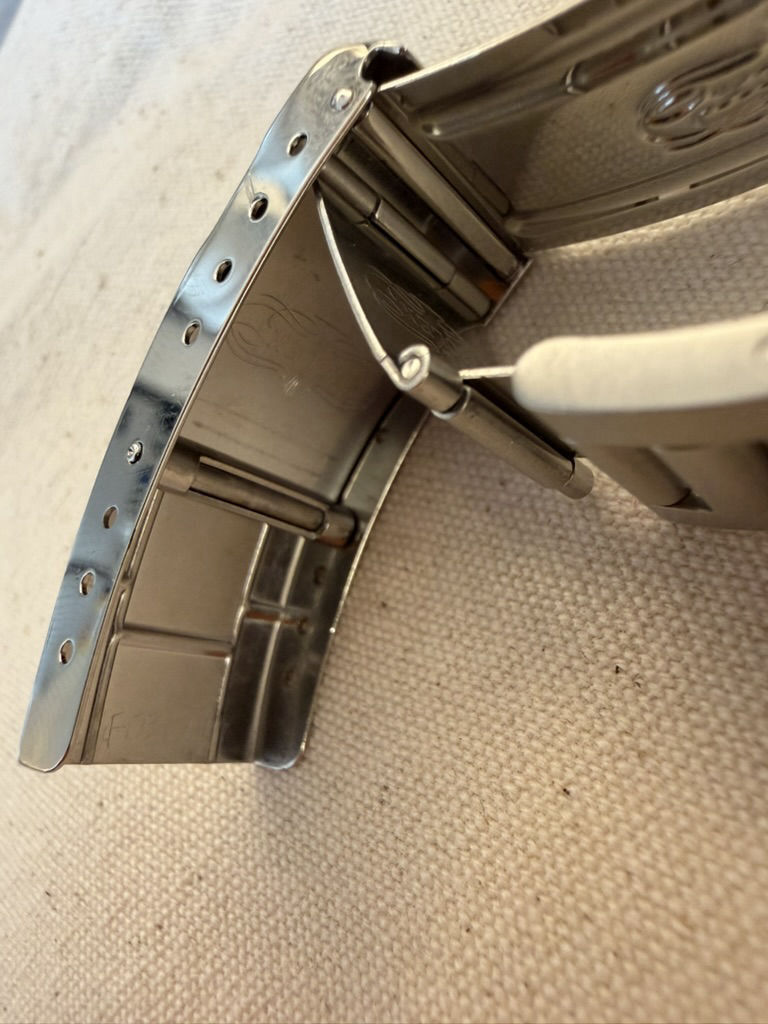
A close-up may show the condition of the clasp, wear on the bracelet, a visible marking or another detail that matters to the buyer. But a photograph should not be expected to prove more than it can. It may support an observation about visible condition. It does not necessarily establish provenance, ownership, component originality or authenticity.
The right question is not simply: "Are there enough photographs?" It is: "Do the photographs support the claims being made, and what remains unanswered?" That is a much more useful question for the buyer, the seller and the marketplace.
The questions change with the product
The same issue exists in every specialist category. What matters is not that a component changed, but that the change is disclosed clearly enough for the buyer to decide whether it matters.
A marketplace cannot solve that complexity with one generic listing template. The category changes. The item changes. The evidence required to support the decision changes with them.
A Hermès Birkin may have replacement hardware, refinished leather or a third-party repair.
A vintage Cartier Panthère may have been resized, restored or fitted with replacement stones.
An original 1985 Air Jordan 1 "Chicago" may have replacement laces, insoles, packaging or restored components.
None of those facts automatically makes the item undesirable.
Show the buyer what is known, what supports it and what remains unverified.
Better copy is not a better decision
Most listing tools can produce better copy. Generative AI can turn a few facts into a polished description in seconds. What it should not do is fill missing information with plausible assumptions or make an unsupported claim sound more convincing.
The PCIFIC platform is built to strengthen the decision behind the copy. It can sit behind an existing marketplace journey, assess the available information and evidence, identify what is missing and return the next relevant question or action.
The seller receives clearer guidance. The marketplace receives more structured information. The buyer can better understand the difference between a claim and the evidence supporting it.
A complete listing should not be defined only by the number of fields that have been filled. It should be defined by whether the buyer has enough supported information to make the next decision.